Mural and Monument


The Greatest of These
Established in 1851, Morton Street Middle School was once a vibrant public school that served generations of local youth. Today, the building stands abandoned and vandalized, limiting the growth and beauty of an otherwise thriving community. While much of the façade remains intact, with only a few missing windows, the structure now presents a powerful opportunity: a large-scale canvas for celebrating the neighborhood’s identity and potential.
The goal of this project is to reimagine the site by transforming the existing building and adjacent basketball courts into a safe, welcoming, and community-centered space—one that encourages young people and residents to gather, stay active, and express their creativity. Through designed mural mockups and AI-generated video imagery, we present a visual proposal that illustrates what this space could become.
The mural concept draws inspiration from the community’s strong foundation in Christian faith. The design is guided by a verse that reflects the values essential to a thriving community: faith, hope, and love.
1 Corinthians 13:13
“So now faith, hope, and love abide, these three; but the greatest of these is love.”


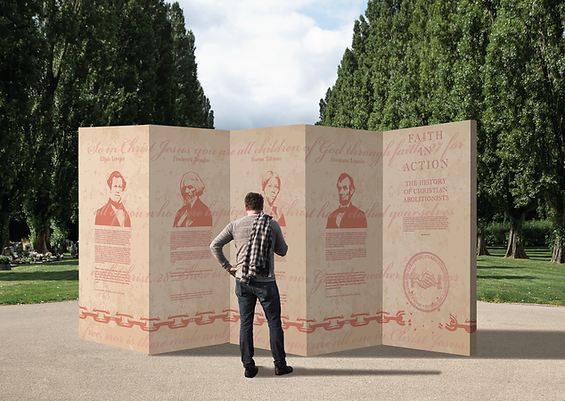
Faith in Action
The monument is an accordion-shaped wall, its panels adorned with intricately etched portraits of pivotal Christian abolitionists. Faces like William Wilberforce, Harriet Tubman, and Frederick Douglass are brought to life in stunning detail, each accompanied by brief inscriptions highlighting their profound contributions. These inscriptions emphasize how their unwavering faith motivated them to fight for freedom and justice.
As visitors walk along the monument’s undulating path, the panels gradually unfold a chronological timeline of the abolitionist movement. Key dates and events are etched into the wall, starting with the early 18th century and moving through the abolition of slavery in the British Empire to the ultimate victory of emancipation in the United States. The timeline immerses viewers in the historical journey, weaving together the moments that defined the fight against slavery. The two sides of the wall come together to form a unified narrative: faith in action, step by step transforming history. At the monument’s conclusion, the etched quote from Paul the Apostle and the imagery of chains shattered and breaking apart powerfully symbolize the meaning behind the hard-fought emancipation these abolitionists achieved through their relentless efforts and enduring faith.